


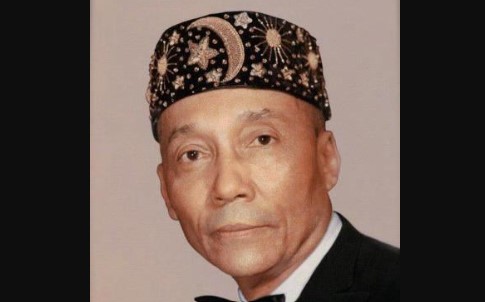
Elijah Muhammad is remembered as one of the most influential and controversial leaders in African-American history. Born as Elijah Robert Poole in 1897, he rose from humble beginnings in rural Georgia to become the spiritual head of the Nation of Islam (NOI) from 1933 until his death in 1975. His leadership transformed a small religious group into a nationwide movement that shaped black identity, politics, and culture in America.
Muhammad’s teachings were bold and often divisive. He spoke about racial pride, economic independence, and separation from white society. His words inspired thousands, including figures like Malcolm X and Muhammad Ali, but also drew criticism for their radical tone. Even decades after his passing, his legacy continues to spark debate.
Elijah Muhammad Age, Career, Wife, Family, Death
| Attribute | Details |
|---|---|
| Full Name | Elijah Robert Poole |
| Popular Name | Elijah Muhammad |
| Date of Birth | October 7, 1897 |
| Place of Birth | Sandersville, Georgia, United States |
| Date of Death | February 25, 1975 |
| Place of Death | Chicago, Illinois, United States |
| Age at Death | 77 years |
| Nationality | American |
| Religion | Islam (Nation of Islam) |
| Occupation | Religious Leader, Author, Activist |
| Known For | Leader of the Nation of Islam (1934–1975) |
| Spouse | Clara Evans (married 1917) |
| Children | At least 23 (including Warith Deen Mohammed, Jabir Herbert Muhammad, Akbar Muhammad) |
| Major Works | Message to the Blackman in America, How to Eat to Live |
| Net Worth (1972) | Estimated $75 million (from NOI businesses and institutions) |
| Successor | Warith Deen Mohammed (later Louis Farrakhan revived NOI structure) |
| Burial Place | Mount Glenwood Memory Gardens South, Illinois |
| Wikipedia | @Elijah_Muhammad |
Early Life and Struggles in Georgia
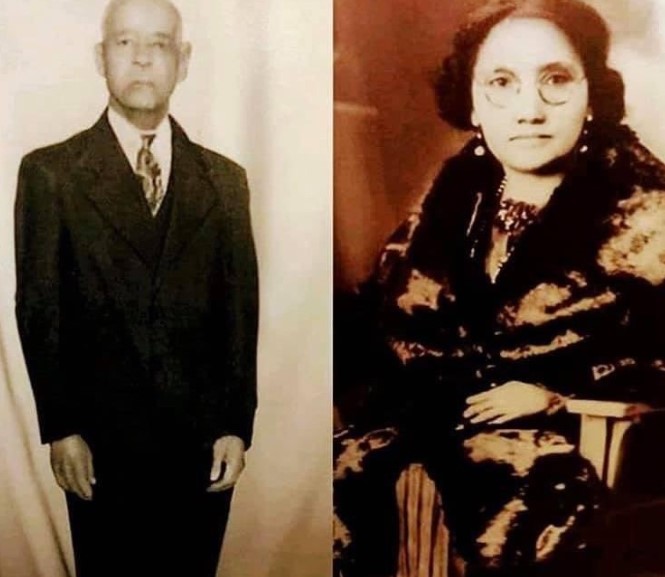
Elijah was born to his mom and dad on October 7, 1897, in Sandersville, Georgia. He was one of thirteen children in a poor family. His father, William Poole, worked as a sharecropper, while his mother, Marie Poole, managed the household. Elijah grew up witnessing lynchings and discrimination, experiences that deeply shaped his later views on race and justice.
His formal education ended early, around the fourth grade. Like many African-American children of that time, he had to work to support his family. He labored in sawmills, brickyards, and cotton fields. Despite limited schooling, Elijah developed a sharp mind and strong determination, qualities that would later help him lead a national movement.
Migration to the North and Harsh Realities
In 1923, Elijah and his wife Clara moved to Hamtramck, Michigan, near Detroit. This move was part of the Great Migration, when millions of African-Americans left the South seeking better opportunities in northern cities. But life in Michigan was not easy. Elijah worked in factories and struggled to provide for his growing family.
Detroit at that time was a city of contrasts. On one hand, it offered jobs in the booming auto industry. On the other, racism and poverty remained widespread. Elijah often spoke later about how the North was not free from discrimination.
Marriage and Family Life
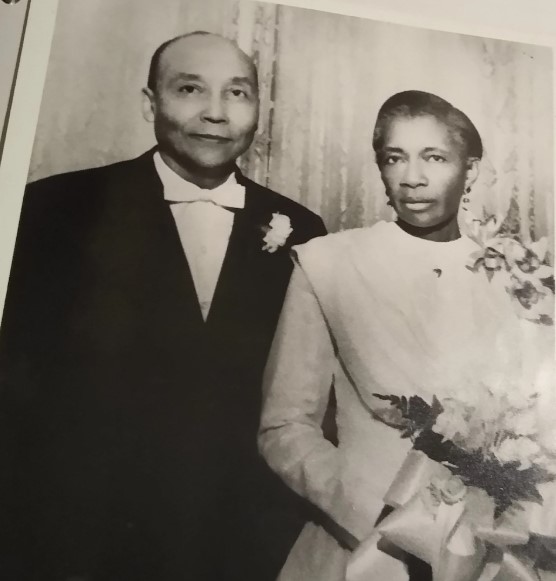
Elijah Muhammad married Clara Evans in 1917, and together they had eight children. Clara played a crucial role in his journey, supporting him through years of poverty and later helping him build the Nation of Islam. She was known as a strong and devoted partner, often described as the quiet force behind his success.
However, Elijah’s family life was complicated. Beyond his marriage, he fathered at least 23 children in total, including Warith Deen Mohammed, Jabir Herbert Muhammad, and Akbar Muhammad. After his death, disputes over inheritance and recognition of children led to lawsuits and family divisions.
Encounter with Wallace Fard Muhammad
Elijah’s life changed forever in 1931 when he met Wallace Fard Muhammad in Detroit. Fard was a mysterious figure who introduced a new religious message to African-Americans, blending Islamic ideas with black empowerment. Elijah was deeply moved by Fard’s teachings, which spoke about self-respect, discipline, and independence from white society.
Elijah became one of Fard’s most devoted supporters in a matter of months. He studied under him, learning about Islam and the belief that African-Americans were the original people of the world. When Fard suddenly disappeared in 1934, Elijah stepped forward as his successor.
See Also:- Rina Izuta
Building the Nation of Islam
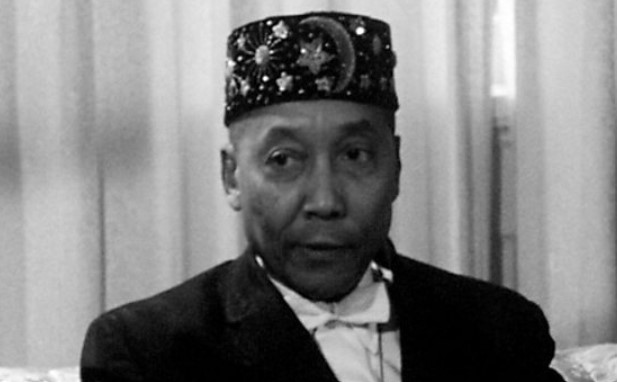
Elijah took a small group of followers in Detroit and turned it into a national movement. Under his leadership, the Nation of Islam (NOI) grew rapidly during the 1940s, 1950s, and 1960s. He established schools, temples, and businesses that gave African-Americans a sense of pride and independence.
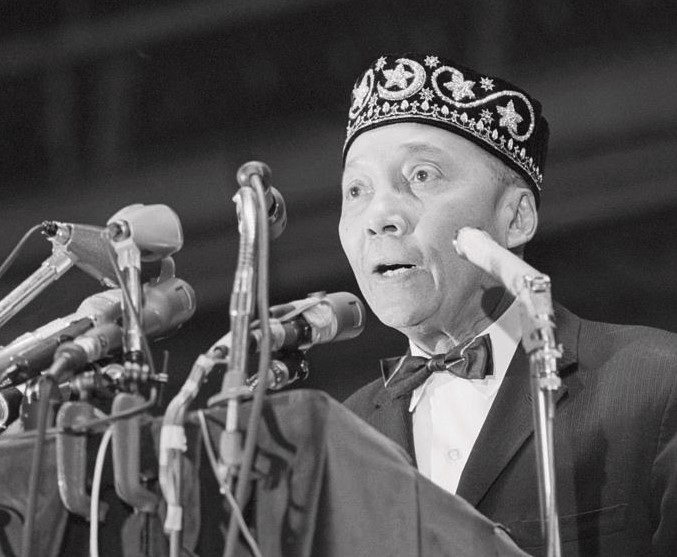
By the early 1970s, NOI owned bakeries, grocery stores, barber shops, clothing shops, and even farmland. They also published newspapers and ran educational institutions. According to reports from 1972, the NOI’s net value was believed to be $75 million, demonstrating how Elijah Muhammad’s ideal of independence had come to pass.
Teachings and Theology
Elijah Muhammad’s teachings were unique and often controversial. He preached that African-Americans were the chosen people and that white people were created by a scientist named Yakub, making them “devils” by nature. While many criticized these ideas, they resonated with followers who had faced generations of racism and injustice.
His book How to Eat to Live gave detailed instructions on diet, encouraging followers to avoid pork and unhealthy foods. He emphasized modesty, respect, and economic independence. His other major work, Message to the Blackman in America, became a guide for thousands of followers, shaping their identity and worldview.
Imprisonment and Challenges
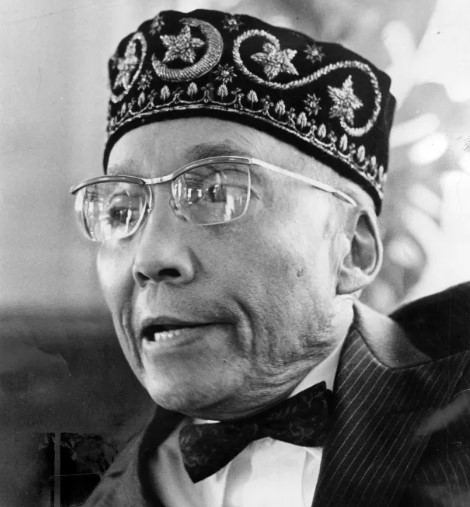
In 1942, Elijah was arrested for refusing to serve in the U.S. military during World War II. He believed that African-Americans should not fight in a war for a country that denied them equal rights. His refusal led to a four-year prison sentence.
Even behind bars, Elijah continued to lead the Nation of Islam. He wrote letters and gave instructions to his followers, keeping the movement alive. His imprisonment only strengthened his image as a leader willing to sacrifice for his beliefs. When he was released in 1946, he returned to his role with even greater determination, ready to expand the NOI across America.
Relationship with Malcolm X and Muhammad Ali
One of the most important chapters in Elijah Muhammad’s life was his connection with Malcolm X. While incarcerated, Malcolm joined the Nation of Islam and soon rose to prominence as one of its most influential figures. Under Elijah’s guidance, Malcolm grew into a national figure, spreading the NOI’s message across America.
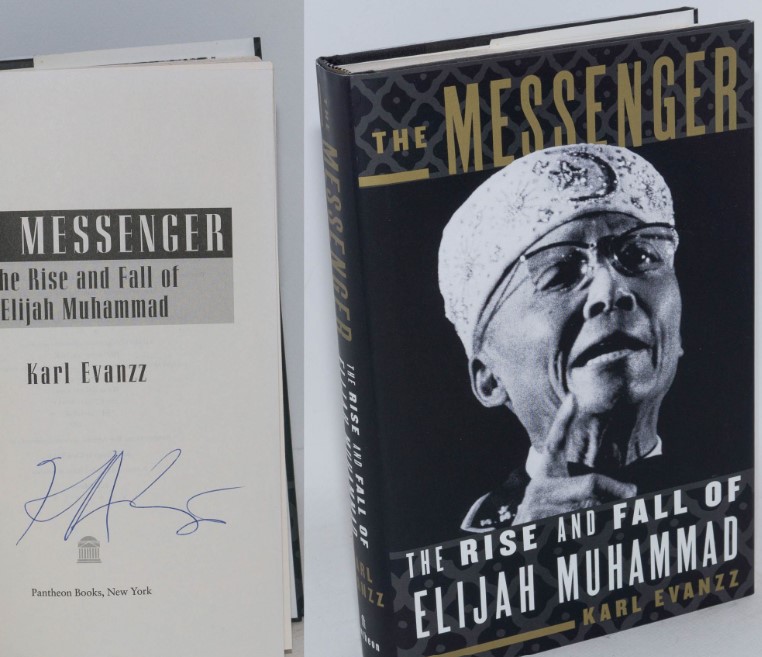
Malcolm admired Elijah but disagreed with some of his choices, especially after learning about Elijah’s relationships with young secretaries. Elijah suspended him, and soon Malcolm left the NOI. Their split was bitter, and Malcolm was assassinated in 1965, a tragedy that still raises questions about NOI’s role.
Controversies and Criticisms
Elijah’s leadership was not free from controversy. One of the biggest scandals involved his extramarital affairs with young secretaries, which went against the strict moral rules he preached. This revelation shocked many followers, including Malcolm X, and damaged his reputation.
He also faced criticism for cooperating with groups outside the black community. Reports suggested that Elijah had meetings with white supremacists, including members of the Ku Klux Klan, to discuss shared interests in racial separation. He also had financial dealings with oil baron H. L. Hunt, which raised questions about his alliances.
Later Years and Death
Elijah’s health started to decline by the 1970s. He suffered from heart disease, diabetes, and asthma, which limited his public appearances. Despite his illness, he continued to lead the Nation of Islam, relying on trusted aides and family members to manage daily affairs. After Elijah’s death, his son Warith Deen Mohammed took over leadership.
On February 25, 1975, Elijah passed away in Chicago at the age of 77. His death marked the end of an era for the NOI. He was buried at Mount Glenwood Memory Gardens South, alongside his wife Clara Muhammad. His passing left behind a movement that was both powerful and divided, with different leaders taking the NOI in new directions.
Read Also:- Fabio Brazza