
Houthi militia storms girls’ school in Hamdan under pretext of organizing a celebration for September 26 anniversary (video)

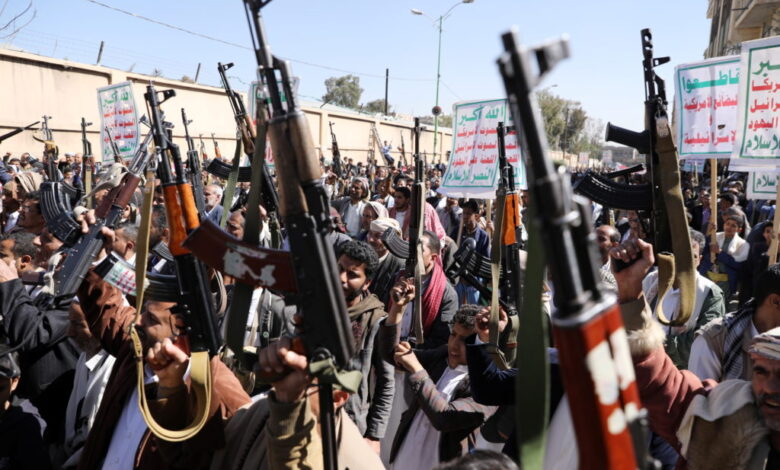
Informed sources said that the Houthi militia stormed a girls’ school in Hamdan District, north of the capital Sana’a, to thwart a celebratory event marking the anniversary of the September 26 Revolution.
According to sources, the militia stormed the girls’ school, expelled the students from the school, and decided to close it.
The sources attributed the reason for the Houthi storming of the school to “the pretext that the school administration was arranging a national celebration on the occasion of the anniversary of the September 26 Revolution.”
The sources confirmed that the militia thwarted the school administration’s arrangements and preparations to organize this celebration after storming the school and closing it.
These are other clips showing the moment of the explosion near the school and the moment of the panic of the young students from the bombing. pic.twitter.com/mXrevkojFT
— باسم علي غراب (أبو غيث) (@AbuGhaith24) September 21, 2024
Activists posted videos on social media of the militia storming the school, and how it spread panic and fear among the students, who rushed to leave the school.
Yemeni activists expressed their condemnation of the Houthi militia’s crime of storming the school, with all its barbarism and decadence, without any religious restraint or regard for values or the sanctity of the school.
The Houthi militia has intensified campaigns against activists and educators to prevent any celebrations of the September 26 anniversary, and has issued circulars to primary and secondary schools in Sana’a and the governorates to prevent any celebrations.
Who are Yemen’s Houthis?
Iran is widely accused of backing the Houthis, a Zaydi Shiite movement that has been fighting Yemen’s Sunni-majority government since 2004.
Iran is widely accused of backing the Houthis, a Zaydi Shiite movement that has been fighting Yemen’s Sunni-majority government since 2004. The Houthis took over the Yemeni capital Sanaa in September 2014 and seized control over much of north Yemen by 2016. Yemeni officials and Sunni states have repeatedly alleged that Iran and its proxy Hezbollah have provided arms, training, and financial support to the Houthis. But Iranian and Hezbollah officials have denied or downplayed the claims. The United States, in coordination with Saudi Arabia, has presented physical evidence of Iranian arms transfers to the group.
Houthi-Saudi Tensions
The Houthi movement emerged in northern Yemen in the 1990s, in part, as a reaction to rising Saudi financial and religious influence. In November 2009, the Houthis crossed into Saudi Arabia amid their rebellion against Yemen’s central government. For the first time, the Saudi army deployed abroad without an ally. The Saudis launched air strikes against the rebels and engaged in ground skirmishes. More than 130 Saudis died.
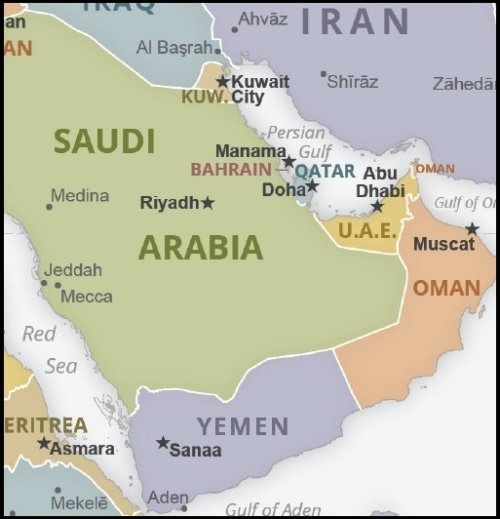
The next major round of Saudi-Houthi fighting began in March 2015. A coalition led by Saudi Arabia and the United Arab Emirates (UAE) launched airstrikes against Houthi targets in Yemen. The war between the Houthis and Yemen’s internationally recognized government and its supporters dragged on, despite U.N. efforts to broker peace talks.
Tensions between the Saudi-led coalition and Iran escalated sharply on November 4, 2017, when a ballistic missile was fired at King Khalid International Airport in Riyadh. The Houthis claimed responsibility for the attack, the first time a ballistic missile had come so close to the capital since the start of the war. The Saudi Defense Ministry claimed that it had intercepted the missile. Saudi Foreign Minister Adel al Jubeir called the attack an act of war by Iran. “It was an Iranian missile, launched by Hezbollah, from territory occupied by the Houthis in Yemen,” he said. U.S. President Donald Trump also accused the Islamic Republic. “A shot was just taken by Iran, in my opinion, at Saudi Arabia…and our system knocked the missile out of the air,” he said.
Tehran rebuffed the Saudi and U.S. claims as “false, irresponsible, destructive and provocative.” In Lebanon, Hezbollah leader Hassan Nasrallah refuted allegations of the group’s involvement as “silly” and “completely baseless.” In response to the attack, Saudi Arabia imposed a near-total blockade on Yemen.
The situation further deteriorated when the Houthis killed ex-president Ali Abdullah Saleh on December 4, 2017. Saleh had officially aligned with the Houthis in May 2015, helping them gain control over much of northern Yemen. But the alliance was shaky at best. In August, one of Saleh’s top advisers was shot and killed following a confrontation with the Houthis. On December 2, Saleh publicly split from the Houthis, seeking a “new page” with the Saudi-led coalition. “I call upon the brothers in neighboring states and the alliance to stop their aggression, lift the siege, open the airports and allow food aid and the saving of the wounded and we will turn a new page by virtue of our neighborliness,” he said. Two days later he was killed by Houthi rebels in a roadside ambush.
Iranian officials celebrated Saleh’s death. Ali Akbar Salehi, the director of Iran’s nuclear program and a former foreign minister, said that Saleh got what he deserved, Fars News Agency reported. A senior advisor to Supreme Leader Ayatollah Ali Khamenei said that Saleh’s death would help the Yemeni people “determine their own fate” free of Gulf influence. “The United Arab Emirates and Saudi Arabia conspiracy was foiled by the people of Yemen,” Ali Akbar Velayati said.
In 2018, Houthi missile attacks on Saudi Arabia became increasingly common. The group also grew increasingly bold in its choice of targets. It damaged a Saudi oil tanker in July 2018. The fighting exacerbated what the United Nations called the “world’s worst humanitarian crisis.” More than 23 million people – 80 percent of Yemen’s population – needed humanitarian aid and protection, the U.N. reported.
On September 14, 2019, the Houthis claimed credit for drone attacks on two key oil installations in Saudi Arabia. But U.S. intelligence presented to the U.N. Security Council reportedly demonstrated that the attack originated from within Iran, not Yemen. Secretary of State Mike Pompeo accused Iran of perpetrating the “unprecedented attack on the world’s energy supply.” Iranian Foreign Minister Mohammad Javad Zarif dismissed the U.S. claims in a tweet.
The Houthis widened the scope of the conflict in early 2022 by targeting UAE with drones and ballistic missiles. Emirati and U.S. military forces intercepted two ballistic missiles fired by the Houthis toward Abu Dhabi on January 24. The 2,000 U.S. troops housed at Al Dahfra Air Base sheltered in bunkers and fired Patriot missiles in response. A Houthi spokesperson warned that the UAE had “become an unsafe country.”
The following is an overview of the Houthi movement, including its origins, religious inspiration and alleged links to Iran.
Where are the Houthis from? What role have they played in Yemen’s history?
The Houthis are a large clan originating from Yemen’s northwestern Saada province. They practice the Zaydi form of Shiism. Zaydis make up around 35 percent of Yemen’s population.
A Zaydi imamate ruled Yemen for 1,000 years, before being overthrown in 1962. Since then, the Zaydis – stripped of their political power – have struggled to restore their authority and influence in Yemen. In the 1980s, the Houthi clan began a movement to revive Zaydi traditions, feeling threatened by state-funded Salafist preachers who established a base in Houthi areas. Not all Zaydis, however, align with the Houthi movement.
Houthi insurgents have clashed with Yemen’s government for more than a decade. Since 2011, the Houthi movement has expanded beyond its Zaydi roots and become a wider movement opposed to the central government. The insurgents have also begun referring to themselves as Ansarullah, or “Party of God.”
How does Zaydism compare to the type of Shiism practiced in Iran?
Like other Shiites, Zaydis believe that only descendants of the Prophet Mohammed’s cousin and son-in-law, Ali, have the right to lead the Muslim community as imams – divinely-appointed successors of the Prophet. Most adherents of Zaydism reside in Yemen, and Zaydis make up around eight percent of the world’s 70 million Shiites.
But the Zaydis are distinct from the “Twelver” form of Shiism practiced by the majority of the world’s Shiites, including most Shiites in Iran. Twelver Shiites believe the twelfth imam, whom they consider infallible, disappeared in 874AD and will one day return to usher in an age of justice as the Mahdi, or promised one. In the Mahdi’s absence, Twelver Shiites believe clerics can substitute for his authority on certain issues. The faithful are obliged to obey the clerics’ religious rulings, a power transferred to Iran’s theocracy after the 1979 revolution.
Zaydis, also known as “Fivers,” believe that Zayd, the great-grandson of Ali, was the rightful fifth imam. But Twelver Shiites consider Zayd’s brother, Mohammad al Baqir, the fifth imam. The Zaydis do not recognize the later Twelver imams, and instead believe anyone related to Ali is eligible to lead the Muslim community. They also reject the Twelver doctrine that the imam is infallible.
The Houthis’ close connections to Iran, however, seem to have led to an increase in Twelver influence. “Twelver Shiite practices that are novel to Yemen are increasingly being incorporated into religious practice; for example, the commemoration of Ashura was publicly celebrated by Houthi supporters en masse for the first time in 2017, and Yemeni Shiites now openly observe Eid al-Ghadir, a Shiite religious celebration rumored to have been practiced mostly in secret previously,” according to Sama’a Al-Hamdani. The movement’s leadership has close ties to Iran’s Islamic Revolutionary Guard Corps and Lebanese Hezbollah.
Who is supporting the Houthis? How?
Iranian officials have supported the Houthis’ cause and compared the group to Hezbollah. “Iran supports the rightful struggles of Ansarullah in Yemen and considers this movement as part of the successful Islamic Awakening movements,” Ali Akbar Velayati, a senior advisor to Supreme Leader Khamenei, said in October 2014. But Tehran has repeatedly denied providing arms, funds or training to the Houthis.
Saudi Arabia has long accused Iran of arming the Houthis to fight a proxy war. “We are worried about…the tendencies of Iran in the region, which is one of the leading elements implanting instability in the region,” the late Saudi Foreign Minister, Prince Saud al Faisal, said in 2015.
In October 2016, a U.S. admiral said that U.S. Navy and allied nations’ warships had intercepted five weapons shipments from Iran to the Arabian Peninsula since April 2015. The shipments reportedly included anti-tank missiles, sniper rifles and thousands of AK-47 automatic rifles. “These accusations are totally false,” Iranian Foreign Ministry spokesman Bahram Ghasemi (left) said in response.
In April 2017, Secretary of State Rex Tillerson said that Iran supports the Houthis’ “attempted overthrow of the government by providing military equipment, funding, and training, thus threatening Saudi Arabia’s southern border.” In November 2017, however, Revolutionary Guards commander Maj. Gen. Ali Jafari claimed that “Iran’s assistance is at the level of advisory and spiritual support.”
Tensions over Iranian support of the Houthis escalated in late 2017. In November, Saudi Arabia charged Iran with an act of war for a missile fired at the Saudi capital by the Houthis in Yemen. Iran denied any links to the attack. But remnants of four ballistic missiles fired into Saudi Arabia by the Houthis on May 19, July 22, July 26 and November 4, 2017 appear to have been designed and manufactured by Iran, according to a confidential U.N. report from November 2017.
“The United States welcomes this report, as should every nation concerned about Iranian expansion,” U.S. ambassador to the United Nations Nikki Haley said on December 14, in front of the remains of a missile allegedly fired by the Houthis into Saudi Arabia. “It was made in Iran, then sent to Houthi militants in Yemen. From there it was fired at a civilian airport, with the potential to kill hundreds of innocent civilians in Saudi Arabia.” The Qiam is thought to have a maximum range of nearly 500 miles.
Iranian officials and Houthi leaders denied the U.S. allegations. “After three years of war, America suddenly finds evidence that Iran supports the Houthis,” a Yemeni spokesman said, according to Reuters. “America did not find any evidence in all the missiles fired from Yemen until now. The story is clear. They want to give Arabs a story to divert their attention from Jerusalem. Instead being angry at Israel, they wave the Iranian boy,” he added.
On December 21, the U.S. State Department echoed Haley’s allegations. “There is a very key relationship between the Iranians and the Houthis,” Tim Lenderking, deputy assistant secretary for Near Eastern Affairs, said. “I don’t want to overstate it. I don’t want to suggest that the Houthis operate entirely at the behest of the Iranians. But it’s an important relationship and one that the Iranians are able to exploit.” Lenderking encouraged reporters to visit the display of missile remains and other military equipment that Haley highlighted the previous week.
In January 2018, a U.N. report concluded Iran had violated an arms embargo by failing to prevent the Houthis from obtaining Iranian missiles. Iran did not comment on the U.N. panel report, but Iranian foreign minister Javad Zarif denied U.S. claims of Tehran’s missile support once again in a series of tweets in late January 2018.
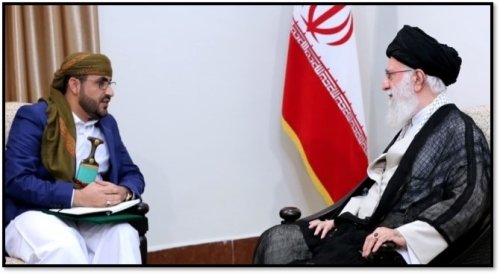
Less than two weeks later, however, Houthi spokesman Mohammad Abdul Salam met with Zarif in Tehran. Abdul Salam updated Zarif on the current conditions in Yemen. Zarif outlined Iran’s four-point peace plan for Yemen and stressed the need for an immediate end to the war. He also called for the immediate shipment of humanitarian aid to Yemeni civilians.
In February 2018, the United States, Britain, and France drafted a U.N. resolution that condemned Iran for violating the Yemen arms embargo by failing to prevent the Houthis from obtaining Iranian missiles. Russia vetoed the resolution.
The Houthis stepped up their attacks on Saudi Arabia in the following months. In late March 2018, the rebels fired seven missiles at Saudi Arabia in one night and resulted in the of an Egyptian resident. A few weeks later, they struck a Saudi oil tanker in international waters west of Yemen’s Hodeidah port.
A mid-April 2018, a missile targeting the Saudi capital Riyadh prompted a U.S. response. The State Department condemned the attack and blamed Iran for its alleged Houthi support. “We support the right of our Saudi partners to defend their borders against these threats, which are fueled by the Iranian regime’s dangerous proliferation of weapons and destabilizing activities in the region,” said State Department spokesperson Heather Nauert.
Foreign Minister Javad Zarif accused the United States of fabricating evidence related to the displayed missile parts recovered from Saudi Arabia. One featured logo was from the Standard Institute of Iran, which regulates consumer goods, not weapons, Zarif told the Associated Press during a visit to New York in late April 2018. “It’s a sign of quality,” Zarif said. “When people want to buy it, they look at whether it’s been tested by the Standard Institute of Iran that your cheese puffs are good, your cheese puffs will not give you a stomach ache. I mean, nobody will put the logo of the Standard Institute of Iran on a piece of missile.”
In November 2018, the State Department claimed that Iran’s support for the Houthis had deepened. Brian Hook, the special envoy for Iran, unveiled a sampling of weapons allegedly manufactured in Iran and transferred to Yemen, including a Sayyad 3C surface-to-air missile with a range of 46 miles and two types of anti-tank guided missiles. Hook also said components of a Shahed 123 drone were recovered in Yemen. That model is likely a predecessor of the Shahed 129, which flies at a medium altitude and can endure long missions.
In January 2019, the U.N. Panel of Experts on Yemen reported that the Houthis were gaining access to increasingly advanced drone technology. “The unmanned aerial vehicles continued to be used in significant numbers in Yemen, implying that the Houthi forces retained access to the critical components, such as engines, guidance systems, from abroad that are necessary to assemble and deploy them.” The experts warned that the Houthis gained access to an additional drone in mid-2018 with the potential range of up to 932 miles. “It would give credence to the claims by the Houthis that they have the capability to hit targets such as Riyadh, Abu Dhabi and Dubai,” they wrote. The panel also highlighted the wide use of “suicide or kamikaze drones,” drones fitted with explosives that crash into their targets. The report noted that the most-commonly used Houthi drone was the Qasef-1, first seen in the field in 2016, which is similar to the Iranian-made Ababil-2/T suicide drone.
In February 2022, U.S. Central Command implicated Iran in providing advanced weaponry to the Houthis after they fired ballistic missiles at Abu Dhabi. “Medium range ballistic missiles that were fired from Yemen and entered UAE were not invented, built, designed in Yemen,” General Kenneth McKenzie told reporters. “All that happened somewhere else. So I think we certainly see the Iranian connection to this.”
The Houthis have other sources of support, however. They have reportedly received funding from local supporters and sympathetic charities as well as from illegal trade.
What are the Houthis’ political views?
The Houthis do not promote a coherent ideology, and their political platform is vague and contradictory. The original Houthi insurgents desired to imitate Hezbollah, to have power without actually ruling. “The Houthis have always been on the outside. They’ve been a militia group that’s now starting to dabble in politics,” Yemen expert Gregory Johnsen, who studied and lived in the country for years, told NPR’s “Fresh Air” in April 2015. “And they don’t really know how to rule.”
The Houthi emblem only offers a broad view of the group’s views. It is made of up entirely of the following phrases, “God is great, Death to America, death to Israel, damnation to the Jews, victory to Islam.” But the Houthis’ Hezbollah-like denunciation of the United States and Israel often seems “largely for show,” according to Les Campbell at the National Democratic Institute. Their ties to former president Saleh threaten to expose the group as “just another group sharing in the spoils of corruption.”
The Houthis’ Zaydi roots do not necessarily dictate their approach to politics. Their leaders have claimed they are not attempting to revive the Zaydi imamate, but rather to seek greater political inclusion. Since 2011, they have used nationalist and populist language in their messaging rather than framing themselves as a strictly Zaydi movement. And they have cultivated a range of Sunni political allies.
The Houthis participated in the U.N.-sponsored National Dialogue Conference from 2013 to 2014. While they did not reject the reform agenda in principle, the Houthis opposed proposals to convert Yemen into a six-region federalist state. The proposal would link Saada with Sanaa, but the Houthis want Saada to be its own autonomous region.
What are the roots of the Houthis’ conflict with the central government?
Hussein Abdreddin al Houthi, a prominent Zaydi cleric and member of parliament from 1993 to 1997, became a strong critic of President Ali Abudllah Saleh in the 1990s. He accused the government of aligning too closely with the United States and Israel. Tensions mounted further after President Saleh reportedly cut funding to Hussein al Houthi in 2000. Frustrated by the Zaydis’ poor political and economic status, he began rallying supporters for anti-government demonstrations in the early 2000s.
The government issued a warrant for al Houthi’s arrest, and his followers began clashing violently with security forces. Al Houthi was killed by security forces in 2004. Since then, his relatives and supporters have waged six uprisings against the government, known as the Houthi wars. President Saleh accused Iran of supporting the rebellions. The Houthis signed a ceasefire agreement with the government in 2010, but joined the Arab Spring protests against Saleh one year later.
How did the Houthis rise to power?
After months of protests, President Saleh ceded power to his deputy, Abd Rabbuh Mansour al Hadi in November 2011. But Hadi enjoyed little popular support in Yemen, and the Houthis took advantage of the power vacuum in the north. From 2012-2013, they gained followers and allies. They consolidated their territorial control, pushing south towards Sanaa.
In September 2014, the Houthis took over the capital. They initially agreed to a U.N.-brokered peace deal that required them to withdraw from Sanaa following the formation of a unity government.
But in January, the Houthis rejected the government’s newly drafted constitution and took over the presidential palace. President Hadi and his government resigned on January 22. The next month, the Houthis announced that a five-member presidential council would replace Hadi.
Hadi fled south to Aden and revoked his resignation, declaring himself the legitimate president of Yemen. In response, Houthi insurgents began bombing Hadi’s Aden headquarters.
At Hadi’s request, Saudi Arabia – along with a coalition of nine other Sunni nations – began launching airstrikes against Houthi positions on March 26. The Houthis remained defiant. “Our fighters will not evacuate from the main cities or the government institutions,” Houthi leader Abdul-Malik al Houthi said on April 19. “Anyone who thinks we will surrender is dreaming.”
On April 21, Saudi officials announced the end of the campaign, known as operation “Decisive Storm,” claiming they had successfully degraded the Houthis’ military infrastructure. The Houthis also agreed to meet several U.N. demands, including releasing the Yemeni Defense Minister, whom they were holding captive. But Saudi Arabia resumed airstrikes two days later, and the first month of the campaign had neither driven the Houthis from Sanaa nor restored Hadi to power.
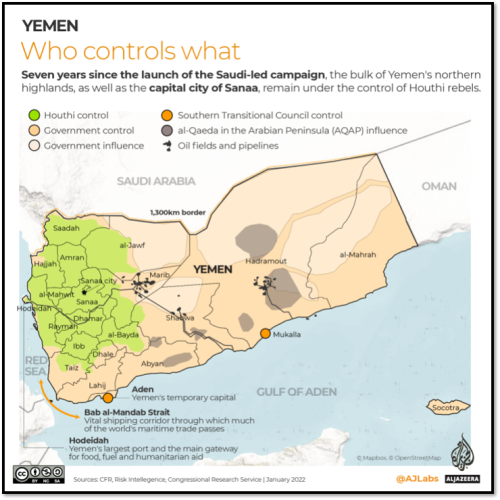
Multiple attempts at peace talks organized by the United Nations failed. The first two attempts were in Switzerland in June and December 2015. The United Nations tried again in Kuwait in April 2016, but discussions broke down in August and fighting between the Houthis and pro-government forces resumed.
As of March 2017, seven ceasefire agreements had been broken in the conflict. In December 2017, after 30 months of the Saudi-led campaign in Yemen, the Houthi’s were largely in control of northern Yemen.
In December 2018, the warring parties met in Stockholm, Sweden, for the first talks in two years. They agreed to a ceasefire, prisoner exchange and coalition troop withdrawal from the port of Hodeidah, which handles the majority of imports. But the truce broke down by early 2019.
In April 2022, the Houthis and the Yemeni government agreed to two-month truce brokered by the United Nations. The United States and Iran welcomed the first nationwide ceasefire since 2016. In June 2022, the warring parties agreed to extend it for another two months. “The truce represents a significant shift in the trajectory of the war and has been achieved through responsible and courageous decision making by the parties,” Hans Grundberg, the U.N. special envoy for Yemen, said in a statement.
What is the relationship between Houthis and other Islamists in Yemen?
The Houthis have a tense relationship with Islah, a Sunni Islamist party with links to the Muslim Brotherhood. Islah claims the Houthis are an Iranian proxy, and blames them for sparking unrest in Yemen. The Houthis, on the other hand, have accused Islah of cooperating with al Qaeda in the Arabian Peninsula (AQAP).
After the Houthis took over Sanaa in September 2014, Islah initially took a few steps towards reconciliation. In November, top Islah and Houthi leaders met to discuss a political partnership. Islah called on the Houthis to cease attacks on Islah members and to release Islah prisoners. In December, the United Nations and Gulf Cooperation Council brokered a deal between the two groups to cease hostilities.
But clashes between the Houthis and Islah continued. In the first four months of 2015, the Houthis kidnapped dozens of Islah party leaders and raided their offices. By April, more than 100 Islah leaders were detained by the Houthis. Tensions increased after Islah declared support for the Saudi-led airstrikes.
The Houthis are also at odds with Sunni extremist groups. On March 20, 2015, an ISIS affiliate calling itself the Sanaa Province claimed responsibility for suicide bomb attacks on two Zaydi mosques that killed at least 135 people and injured more than 300 others. The group issued a statement that said “infidel Houthis should know that the soldiers of the Islamic State will not rest until they eradicate them.”
AQAP denied involvement in the mosque attacks, but has frequently targeted the Houthis. In April 2015, the group claimed responsibility for three suicide attacks that killed dozens of Houthis in Abyan, al Bayda’, and Lahij. AQAP has reportedly partnered with southern tribes to fight the Houthis.
Who are their leaders?
Abdul Malik al Houthi, brother of Hussein al Houthi, has been the group’s spiritual, military, and political leader since 2007. Little is known of his personal life, and he makes few public appearances. His brother-in-law, Youssef al Midani, is the deputy leader. Abdul Malik’s two brothers, Yahia and Abdul-Karim, are also senior leaders of the movement.
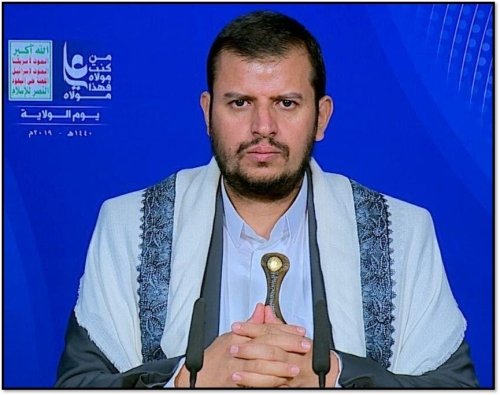
On April 14, 2015, the U.S. Treasury imposed sanctions on Abdul Malik al Houthi for engaging in acts that “threaten the peace, security, or stability of Yemen.” The same month, the U.N. Security Council imposed an arms embargo against the Houthis and blacklisted Abdul Malik al Houthi.
On January 10, 2021, the Trump administration announced that it would designate the Houthis as a Foreign Terrorist Organization and as a Specially Designated Global Terrorist. The State Department accused Iran’s Revolutionary Guards of providing missiles, drones and training to the Houthis in violation of U.N. Security Council resolutions. Iran “continues to thwart the efforts of the United Nations and friendly countries to solve the crisis peacefully and end the conflict,” Pompeo said in a statement. The designation went into effect on January 19, 2021 – a day before Trump’s term ended.
The Biden administration, however, revoked the listing less than a month later. “We have listened to warnings from the United Nations, humanitarian groups, and bipartisan members of Congress, among others, that the designations could have a devastating impact on Yemenis’ access to basic commodities like food and fuel,” Secretary of State Antony Blinken said on February 12, 2021. He clarified that senior Houthi leaders – Abdul Malik al Houthi, Abd al Khaliq Badr al Din al Houthi, and Abdullah Yahya al Hakim – would remain sanctioned as individuals. The group was removed from the terrorist lists on February 16, 2021.