

Stories Behind Brands: Vaseline – The Untold Story of Robert Chesebrough and Vaseline’s Rise to Ubiquity

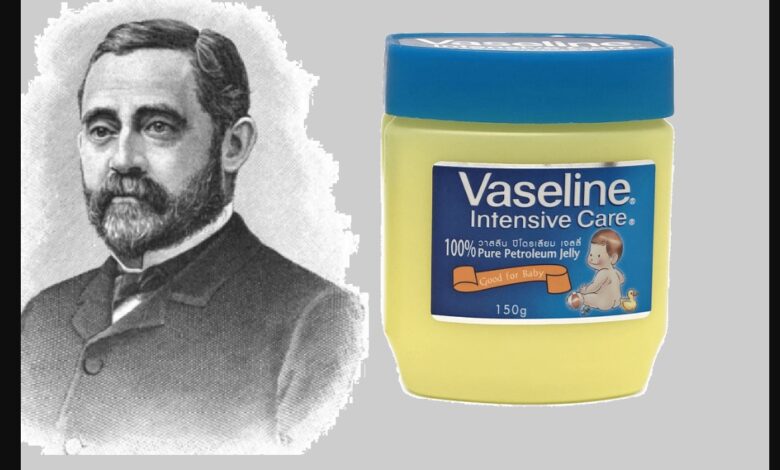
Robert Augustus Chesebrough (born January 9, 1837 – September 8, 1933) was an American chemist who discovered petroleum jelly—which he marketed as Vaseline—and founder of the Chesebrough Manufacturing Company.
Life and career
Born in London, England, to American parents on January 9, 1837, Chesebrough was raised in New York City.He married Margaret McCredy on April 28, 1864, and they had four children.
Chesebrough began his career as a chemist clarifying kerosene from the oil of sperm whales. The discovery of petroleum in Titusville, Pennsylvania, rendered his job obsolete, so he traveled to Titusville to research what new materials might be created from the new fuel.
As he was strolling around the oil field, he found out about something called rod wax, also known as petroleum jelly, a jellylike substance that was cleaned off of the pumping equipment often. Chesebrough was told it was a nuisance, except when someone had a cut or burn. If it was rubbed on an injury, then it would lessen the pain and make the injury heal quicker. He then trade-named the jelly as Vaseline.
In 1875, he founded the Chesebrough Manufacturing Company, a leading manufacturer of personal-care products. Chesebrough patented the process of making petroleum jelly (U.S. patent 127,568) in 1872. By 1874, stores were selling over 1,400 jars of Vaseline a day.
Chesebrough’s success stemmed from a firm belief in his product. Before he began selling petroleum jelly, he tested it on his own cuts and burns. Chesebrough was still unable to sell any to drug stores until he traveled around New York demonstrating his miracle product. In front of an audience, he would burn his skin with acid or an open flame, then spread the clear jelly on his injuries while demonstrating past injuries, healed, he claimed, by his miracle product.
In reality, it doesn’t heal cuts and burns, the jelly forms a layer, causing dirt to not get in (one of the leading causes of death and disease in his day were due to open wounds being infected) and trapping the moisture in. To further create demand, he gave out free samples, one of the first instances of it ever being done.
Chesebrough opened his first factory in 1870. The first known reference to the name Vaseline is in his U.S. patent: “I, Robert Chesebrough, have invented a new and useful product from petroleum which I have named ‘Vaseline…'” . The word is believed to come from German Wasser (water) + Ancient Greek: έλαιον (élaion, oil).
Chesebrough lived to be 96 years old and was such a believer in Vaseline that he claimed to have eaten a spoonful of it every day. He died at his house in Spring Lake, New Jersey. He also, reportedly, during a serious bout of pleurisy in his mid-50s, had his nurse rub him from head to foot with Vaseline. He soon recovered, and credited his recovery to Vaseline. He is buried in Woodlawn Cemetery in the Bronx, New York City.
Stories Behind Brands: Vaseline
Brands are more than just a name or a logo; they embody a story and a legacy that have been built over time. Behind every brand, there is a rich history and a unique set of circumstances that have shaped its identity and contributed to its success.
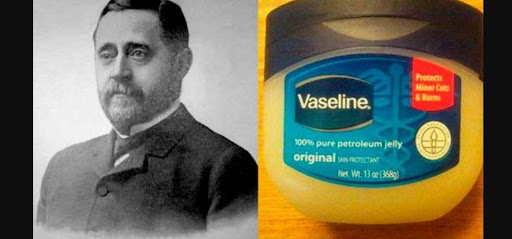
These background stories have become an integral part of the brand, and they serve as an essential tool for building brand loyalty and connecting with customers. There are various brands that you think you know about, but do you really know them? In this series of articles, we will be telling you unknown stories behind the known brands.
From Kerosene to Crude Curiosity: A Chemist’s Unexpected Detour
The year was 1859. Robert Chesebrough, a young chemist with a burgeoning career, was toiling away refining whale oil into kerosene, the illuminant of choice for a burgeoning America. However, the discovery of petroleum in Titusville, Pennsylvania, threw a wrench into his plans.
This “black gold” promised to revolutionize the fuel industry, rendering whale oil obsolete. Yet, for the inquisitive Chesebrough, this wasn’t a setback, but an invitation to explore uncharted territory.
A Sticky Encounter
Venturing to Titusville, Chesebrough became captivated by a seemingly insignificant detail – a jelly-like substance oil workers called “rod wax.” This goo, a byproduct of the drilling process, was considered a nuisance, routinely scraped off equipment. But Chesebrough observed a curious phenomenon. The oil workers themselves slather the rod wax on their cuts and burns, swearing by its healing properties. This anecdotal evidence ignited a spark in the chemist’s mind. Could this discarded goo hold the key to a revolutionary new product?

Five Years of Obsession: Refining the “Wonder Jelly”
Unlike his contemporaries who dismissed rod wax as mere folklore, Chesebrough embarked on a five-year odyssey. He becomes obsessed with understanding this mysterious substance. His laboratory transformed into a crucible of experimentation. Through meticulous distillation and purification processes, he meticulously removed impurities, transforming the crude rod wax into a colourless, odourless jelly by 1865. This marked the genesis of petroleum jelly, a product destined to become a household name.
From Skepticism to Spectacle: Marketing a “Miracle Cure”
Chesebrough, brimming with conviction about his creation, faced a formidable challenge – convincing the medical community of its efficacy. Initial skepticism greeted him with a wall of resistance. Undeterred, Chesebrough adopted a flamboyant marketing strategy that would raise eyebrows in today’s world. He staged public demonstrations, deliberately burning his skin (a practice we strongly advise against!) and then applying his “Wonder Jelly” to the wounds, showcasing its rapid healing properties. He even went as far as claiming to consume a spoonful daily, emphasizing its safety. While some of his tactics were unorthodox, they undeniably captured public attention.
The Birth of Vaseline: A Brand Name for the Ages
In 1872, Chesebrough took a crucial step – christening his creation with the now-iconic name “Vaseline.” The origins of the name are believed to be a clever combination of the German word for “water” (wasser) and the Greek word for “oil” (elaion), hinting at its key properties. This name resonated with consumers, offering a sense of cleanliness and purity. By 1874, Vaseline was flying off shelves at a rate exceeding 1400 jars a day, a testament to the effectiveness of Chesebrough’s unconventional marketing tactics.
Beyond the Hype: Unveiling Vaseline’s True Power
But Vaseline’s success wasn’t solely built on spectacle. Chesebrough, a shrewd businessman, understood the importance of practicality. He was an early adopter of free samples, a marketing strategy still employed today. More importantly, Vaseline offered a genuine solution to a multitude of everyday problems. It soothed dry, cracked skin, offered a protective barrier against harsh weather, and aided in the healing of minor cuts and scrapes. Its versatility appealed to a broad audience, solidifying its place in medicine cabinets across America.
Royal Recognition and Global Expansion: A Brand Fit for a Queen
By the late 1800s, Vaseline transcended national borders. News of its effectiveness reached the ears of Queen Victoria herself, who reportedly used it for her dry skin. In recognition of Chesebrough’s contribution, she bestowed upon him a knighthood in 1883 – a remarkable feat for a man who started with a discarded by-product. To meet the burgeoning global demand, factories were established across Europe, Canada, and Africa, solidifying Vaseline’s position as a global brand.

Adapting to the 20th Century: From Battlefield Necessity to Skincare Revolution
The 20th century ushered in a new era for Vaseline. During World Wars I and II, it became a staple in military first-aid kits, providing essential relief for soldiers’ wounds. Beyond wartime applications, the 1960s saw a shift towards broader skincare solutions. The launch of Vaseline® Intensive Care Lotion in 1969 marked the brand’s foray into a wider range of products. However, despite this diversification
Vaseline remained firmly rooted in its core product – the original, triple-purified petroleum jelly. This unwavering commitment to quality and consistency is a cornerstone of Vaseline’s enduring legacy.
Beyond the Jar: The Enduring Legacy of Robert Chesebrough
Robert Chesebrough’s story isn’t just about a product; it’s a testament to human curiosity and the power of unwavering belief. He dared to look beyond the obvious, transforming a discarded byproduct into a global phenomenon. His relentless pursuit of scientific exploration, coupled with his innovative marketing strategies, paved the way for a brand that has stood the test of time.
Merger with Ponds and acquisition by Unilever
In June 1955, Chesebrough merged with Ponds, a leading American brand of beauty and healthcare products,. The combined entity, Chesebrough-Ponds, continued its growth until 1987, when it was acquired by Unilever, a global giant in consumer goods.

A Symbol of Accessibility: Vaseline in the Modern World
Today, Vaseline remains a ubiquitous presence in households around the world. Its affordability makes it accessible to a vast demographic, a quality Chesebrough himself likely championed. From alleviating diaper rash in new-borns to protecting the weathered hands of labourers, Vaseline continues to serve a multitude of purposes. Its simple formula and enduring effectiveness have earned it a place of trust in medicine cabinets across the globe.
The Future of Vaseline: Innovation Rooted in Tradition
As we look towards the future, Vaseline shows no signs of slowing down. While the brand continues to innovate, introducing new products and formulations, it remains committed to its core principles – quality, affordability, and efficacy. Chesebrough’s legacy lives on not just in the ubiquitous blue and yellow tub, but in the brand’s dedication to providing simple, reliable solutions for everyday skincare needs.
The brand has cleverly evolved, venturing far beyond its original offering. Today, Vaseline boasts a diverse product portfolio catering to a wide range of needs. From nourishing lotions and body washes for everyday care to sunscreens for outdoor enthusiasts and lip balms for those prone to dryness, Vaseline offers something for everyone. Whether you’re seeking deep hydration, sun protection, or simply everyday pampering, Vaseline has a solution that fits your unique needs and preferences.
This strategic expansion ensures Vaseline remains a household name, relevant to a broader audience across generations. Vaseline’s journey, from a gooey curiosity to a global icon, serves as a reminder that the most transformative discoveries can often be found in the most unexpected places.